
星际特工
采访索尼电视公司高管:进一步了解8K战略_我的网站

A |
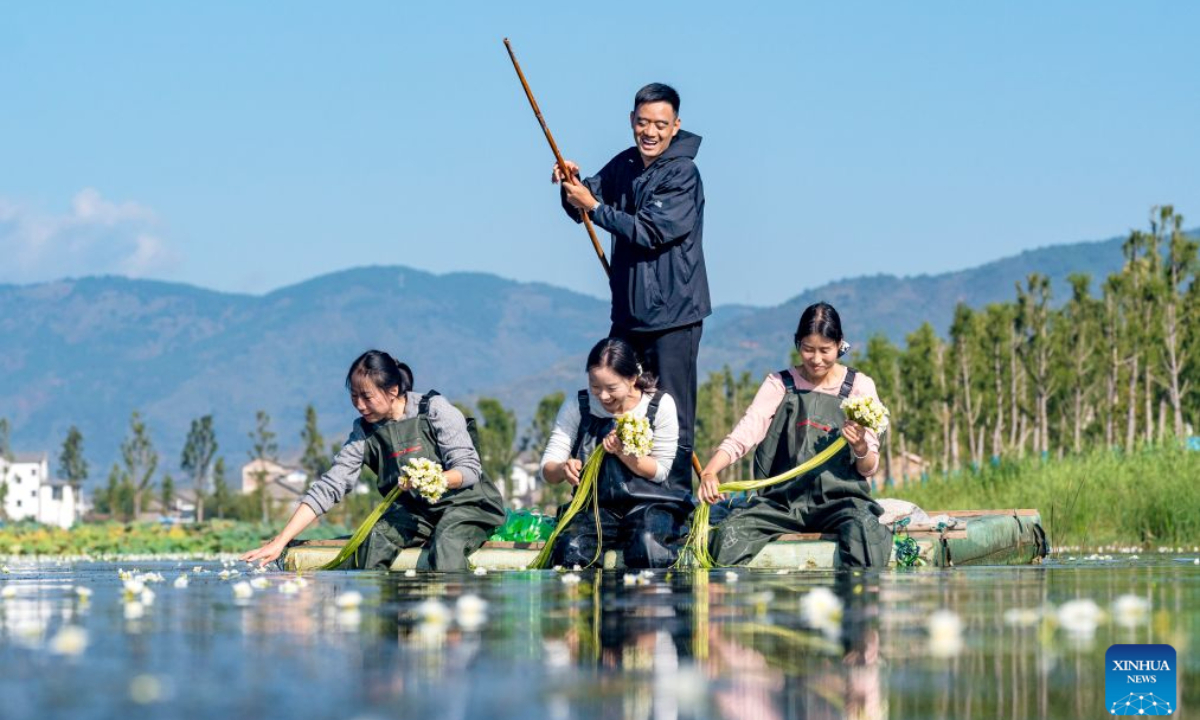
The delicate blossom seen floating there is Ottelia acuminata, an aquatic plant endemic to China, which is known to have extremely strict water quality requirements. It demands high water transparency, cleanliness and calcium content, and survives only in unpolluted waters, serving as a reliable natural indicator of aquatic ecological health.
Its large-scale revival vividly testifies to Erhai Lake's remarkable ecological restoration achievements.
China's Ecological and Environmental Code, enacted on Saturday, stipulates nationwide protection and restoration of river and lake ecosystems, providing solid legal support for systematic water ecological governance across the country.
As China advances its Beautiful China initiative, this code is expected to strengthen rule-of-law guarantees for ecological protection and provide fresh impetus for the country's green and low-carbon transition.
In the early 1990s, agricultural pollution worsened Erhai Lake's water quality, causing frequent blue-green algae outbreaks. A severe algae bloom hit the lake in 1996, leaving the water turbid and smelly. As the environment degraded, Ottelia acuminata nearly disappeared from the lake.
Thanks to years of targeted ecological protection and restoration efforts, the lake's water quality has improved steadily, maintaining an excellent Grade II standard from January to June 2026, and creating favorable conditions for the return of Ottelia acuminata.
Official data show that the plant's coverage on Erhai Lake has surged from 90,000 square meters in 2021 to 950,000 square meters in 2026, marking a remarkable ecological recovery.
The improved water environment has also brought tangible economic benefits, turning the lake's ecological advantages into a sustainable industry. From lake ecology to farm cultivation and consumer products, Ottelia acuminata's dual ecological and economic value has been fully realized.
In 2018, environmental worker Zhong Lan noticed the edible plant's great potential for water purification and industrial development. With support from local authorities and Shanghai Jiao Tong University in eastern China, she started a company and built a professional research base in 2024, developing standardized planting techniques that enable high-yield, repeated harvests and offering jobs for local villagers.
Villager Li Xinyuan, who quit Ottelia acuminata cultivation years ago due to low profits, resumed planting in 2023 and earns a stable monthly salary of 4,500 yuan (about 663 U.S. dollars) at the base.
His fellow villager Du Hongquan earned over 100,000 yuan last year from growing the plant and has more than doubled his planting area this year. "The base takes full charge of sales, so we can plant without any worries," Du said.
Eryuan County, the source of Erhai Lake, now has more than 200 hectares of Ottelia acuminata plantation area, creating numerous jobs yearly. The plant has been developed into a diverse range of products like tea, plant-based coffee and cookies.
"I used to think it was exclusive to Yunnan, but I can try it elsewhere too," said a tourist surnamed Ai after tasting the plant at a hotpot restaurant in Hangzhou, east China's Zhejiang Province.
The beautiful lakeside scenery at Erhai has also boosted local tourism. In 2025, Dali received over 120 million tourist visits, attracting visitors to enjoy lake views and experience local Bai ethnic culture, with 407,000 long-term visitors.
Last month, the State Council issued a plan for building a Beautiful China during the 15th Five-Year Plan period (2026-2030), setting out the overall requirements, targets, key tasks and major projects for comprehensively advancing this initiative.
According to the plan, China will achieve overall improvement in ecological and environmental quality and make significant progress toward building a Beautiful China by 2030, with green production and lifestyles largely established and the carbon peaking target reached on schedule.
。

B | 索尼Z9G绝对是CES 2019最受欢迎的产品之一,但在发布时,索尼的新首席执行官吉田一郎并未详细阐述新电视以及8K战略。会后,编辑艾霍采访了索尼视讯产品、索尼中国电视台总裁、索尼集团高级执行副总裁、索尼(中国)有限公司董事长兼总裁高井一郎、索尼集团高级副总裁谢彪,有许多问题。S,进一步了解索尼。尼泊尔8K战略。8K电视的商业化最早可以追溯到2017年,但8K电视的元旦必须等到2019年。与其他电视制造商相比,索尼拥有庞大的产业链。索尼如何打造自己的8K生态链?高井一郎说,作为索尼所有事业的一个概念,有一个短语叫做“从镜头到客厅”。镜头”是指索尼的广播电视设备,进入高清时代以来,索尼已成为广播电视设备,其地位不受任何厂家的动摇,2017年索尼发布了首款8K广播UHC-8300。

C | UHC-8300使用三个1.25英寸的CMOS传感器,可以输出8K/120P的UHD视频,并可以在ITU-R BT.2020颜色空间中拍摄S-log3或HLG HDR视频。”“客厅”指消费品的电视。索尼有一个从生产端到广播端的生态系统。不幸的是,CES 2018没有显示8K广播公司的UHC-8300,但毫无疑问,索尼拥有8K内容的摄像设备、广播设备,而索尼电视不仅用于客厅,在影视后期制作中,越来越多的索尼高品质电视被用作显示器。在这个阶段,索尼8K生态链才刚刚起步,未来我们希望建立一个闭环系统。

D | NHK电视台将在2020年东京奥运会上使用卫星信号进行8K直播。为了实现这一目标,NHK与索尼进行了大量合作,包括4K和8K内容广播。

E | 然而,它仍处于测试阶段,不能透露更多的信息。为实现2022年北京冬奥会8K直播,索尼去年10月与工信部签订了8K超高清电视转播车采购协议。索尼将于今年3月推出首款8K广播车。

F | 在2K到4K时代,索尼与全国电视台和工业界人士有着密切的联系和合作。目前,索尼正与各界探讨如何在未来共同推动8K普及,希望在中国8K普及过程中发挥重要作用。毫无疑问,8K代表着未来。

G | 现在怎么样?2017年和2018年,电视市场继续低迷。所有电视公司在2019年的CES上都出现了8K电视。

H | 越来越多的公司进入了OLED电视领域。海信“激光电视”进入大屏幕市场,取得了良好的效果。

I | 索尼将如何面对这些挑战?2018年,电视市场总量略有下降,仅为2.07%。然而,电视市场的平均价格急剧下降,达到15%。这导致电视市场总量下降11.4%。但在细分方面,一些领域仍在增长,包括65英寸,同比增长95%,75英寸或更高,同比增长177%,而这些高利润领域正是索尼擅长的领域——索尼在10000台单机市场的份额仍然是第一,而OELD市场的份额仍然是第一。

J | 2018财年第二季度,索尼家庭娱乐及音响业务营业利润达到245亿日元,比上一季度增长71亿日元,成为索尼集团前进的主要动力。在8K市场竞争中,索尼认为关键是质量和分辨率。

K | 新发布的8K液晶电视Z9G采用8K HDR图像处理芯片x1旗舰版,新开发的8K X-Reality Pro技术(8K快速图像处理引擎Pro)。结合8K图像信息数据,可以优化不同输入源的质量,甚至是2K、4K甚至网络视频。

L | 对于OLED电视市场,索尼不仅推出了新的A9G电视,还推出了更受欢迎的A8G电视。索尼也关注激光电视的发展趋势,但坚持自己的理念和技术发展路线。激光电视实际上是一种超短聚焦投影。索尼在2018年CES上发布的LSPX-A1是一款超短聚焦投影仪。

M | 采用三片式4K SXRD投影技术,亮度可达2500流明。凭借索尼独有的技术,它可以获得更好的4K HDR效果。但在明亮的客厅环境中,投影机画面无法达到索尼的画面质量标准。索尼并不是不能生产“激光电视”,而是认为技术已经发展到符合索尼的画面质量和音质标准,当价格能被普通消费者接受时,将成为索尼的选择。2019年,索尼仍将面临巨大挑战。索尼将继续提高其工作质量,让店面销售人员以图片质量向消费者展示索尼电视的优势,利用人工智能技术提高生产效率,探索OTT合作运营模式,通过软件内容提高消费者观看电视的娱乐体验。

N |
Current article:http://yyqchno.dinggaxilianmaiyuejienianguai.shop/6wp/20260826/284.html
Published on:13:47:06